Order of the Funeral Mass: A Comprehensive Guide
This guide details the unfolding of a Roman Catholic Funeral Mass, assisting families in making informed choices for this sacred service.
The Funeral Mass is a profound expression of faith, offering comfort and hope during a time of grief. It’s a liturgical celebration of the deceased’s life, acknowledging their journey and entrusting them to God’s mercy. This Mass isn’t merely a farewell, but a powerful affirmation of resurrection and eternal life, central tenets of the Catholic belief system.
The service provides a structured framework for mourning and remembrance, uniting family and friends in prayer. It’s a communal act of worship, reflecting on the scriptures and celebrating the Eucharist – the source and summit of Christian life. Understanding the order of the Mass can help families participate more fully and find solace in its rituals and prayers.
Purpose of this Guide
This comprehensive guide aims to demystify the Funeral Mass, providing clarity and support to those navigating the planning process. It serves as a resource for understanding each element of the liturgy, from the initial greeting to the final dismissal. Our intention is to empower families to make meaningful choices that honor their loved one’s life and faith.
We hope to alleviate anxiety by outlining the sequence of events, explaining the significance of each ritual, and offering insights into potential readings and musical selections. This guide isn’t intended to replace consultation with parish staff, but rather to prepare families for those conversations and foster a more informed and peaceful experience.
Introductory Rites
The service begins with a welcome, sprinkling with Holy Water, placement of the pall, and a procession accompanied by the Entrance Song.
Greeting and Sprinkling Rite
The Funeral Mass commences as the celebrant warmly greets the family and funeral procession at the church doors, offering words of solace and faith: “The grace and peace of God our Father, who raised Jesus from the dead, be always with you.” The congregation responds with a heartfelt “And also with you.”
Following this greeting, a poignant prayer is offered while the casket is gently sprinkled with Holy Water. This ancient rite symbolizes purification and remembrance of the deceased’s baptism, signifying a hopeful transition and the promise of eternal life. It’s a visible sign of God’s blessing and a call to remember the sacredness of life.
Placement of the Pall
Immediately after the sprinkling rite, a significant symbol of the deceased’s Christian identity is placed upon the casket: the pall. This cloth, typically white or cream-colored, represents the “baptismal garment” and signifies the deceased’s new life in Christ. It serves as a visual reminder of their participation in the Paschal Mystery – Christ’s death and resurrection.
The pall is carefully placed by the family or designated individuals, demonstrating their reverence and faith. Its presence underscores that even in death, the deceased remains a beloved child of God, clothed in the grace of their baptism and destined for eternal glory. It’s a powerful and comforting image during the funeral liturgy.
Entrance Song and Procession
As the funeral procession moves solemnly down the aisle, led by the celebrant, the Entrance Song begins. This hymn sets a reverent tone, acknowledging the sorrow of loss while simultaneously proclaiming hope in the resurrection. The music invites all present to participate in the communal prayer and to offer their condolences and support to the grieving family.
The procession typically includes the priest, altar servers, family members, and pallbearers. It’s a visual representation of the community accompanying the deceased on their final journey towards eternal life. The Entrance Song’s lyrics often reflect themes of faith, comfort, and remembrance.
Invitation to Prayer
Following the seating of all attendees, the celebrant leads the congregation in a moment of collective prayer. He addresses those present with words such as, “My brothers and sisters, we believe,” initiating a shared reflection on faith and the promise of eternal life. This invitation serves as a transition from the initial welcoming rites to the more profound spiritual focus of the Liturgy of the Word.
The celebrant’s words acknowledge the shared grief and offer a moment to collectively commend the deceased to God’s mercy. It’s a call to quiet contemplation and a preparation of hearts for the readings and prayers that will follow, fostering a sense of unity and spiritual connection.
The Collect (Opening Prayer)
Immediately after the invitation to prayer, the celebrant offers the Collect, a concise and carefully chosen prayer. This prayer encapsulates the essence of the Mass’s intention – to offer comfort to the bereaved, to remember the deceased with gratitude, and to seek God’s mercy and peace.
Several pre-approved options exist within the Order of Christian Funerals, allowing the celebrant to select a prayer most fitting for the specific circumstances and the liturgical season. The Collect formally petitions God’s blessing upon those gathered and sets the spiritual tone for the remainder of the service, focusing hearts and minds on the hope of resurrection.
Liturgy of the Word
This section features readings from Scripture, thoughtfully selected and often proclaimed by family or friends, enriching the service with spiritual reflection.
First Reading Selection
The First Reading, typically drawn from the Old Testament – though New Testament options exist during the Easter season – sets a foundational tone for reflection. A family member or designated friend often has the honor of proclaiming this passage from the Order of Christian Funerals.
This participation allows for a deeply personal connection to the liturgy. Careful consideration should be given to selecting a reading that resonates with the deceased’s life, faith, or a message of hope and comfort. The chosen text offers a glimpse into God’s enduring promise and provides solace to those grieving. It’s a moment for shared contemplation and spiritual nourishment.
Role of Family/Friends in Readings
The Catholic Church warmly encourages the active participation of family members and friends within the Liturgy of the Word. Specifically, they are invited to assume the roles of lectors, proclaiming the First and Second Readings. This involvement isn’t merely ceremonial; it’s a powerful expression of love and remembrance.
By stepping forward to read, loved ones directly contribute to the sacredness of the Mass, personalizing the experience and honoring the deceased. It’s a tangible way to share in the grief and faith journey, offering comfort to all present. Preparation and reverence are key to a meaningful delivery of God’s Word.
Responsorial Psalm
Following the First Reading, the Responsorial Psalm offers a moment of reflective praise and thanksgiving. This sacred song, typically drawn from the Book of Psalms, provides a musical response to the Word proclaimed. It’s a communal expression of faith, inviting the congregation to participate actively in prayer.
The General Instruction to the Roman Missal (GIRM) explicitly states that when musicians are available, the Responsorial Psalm must be sung. This elevates the liturgical experience, fostering a deeper connection with the divine. The psalm’s verses and refrain create a dialogue between the lector and the assembly, enriching the spiritual atmosphere.
Musical Accompaniment of the Psalm
The musical setting of the Responsorial Psalm significantly enhances its impact within the Funeral Mass. When musicians are present, the GIRM mandates its sung performance, elevating the liturgical experience beyond a simple reading. Careful selection of the musical accompaniment is crucial, aiming for reverence and solace.
Organ music is a traditional and fitting choice, providing a dignified backdrop for the psalm’s verses and refrain. However, other instruments, such as guitars or strings, may be incorporated, depending on parish custom and the family’s preferences. The music should support, not overshadow, the psalm’s message of hope and faith.
Second Reading Selection
The Second Reading, drawn from the New Testament, offers a message of comfort and hope rooted in the Christian faith. Typically, a family member or friend undertakes this reading, fostering a personal connection to the liturgy. Choices are provided within the Order of Christian Funerals, allowing for a selection that resonates with the deceased’s life or the family’s beliefs.
These readings often focus on themes of resurrection, eternal life, and God’s loving embrace. They provide a powerful testament to the promise of salvation and the enduring nature of faith. The selected passage should be thoughtfully considered, offering solace and encouragement to those gathered in mourning.
Gospel Reading
The Gospel Reading, proclaimed by the priest or deacon, holds a central place in the Funeral Mass, presenting the definitive message of Jesus Christ. Families often have a role in selecting the Gospel passage from options provided within the Order of Christian Funerals, ensuring it reflects the deceased’s faith journey or offers particular comfort.
These Gospel selections frequently highlight themes of resurrection, eternal life, and the promise of God’s kingdom. The reading serves as a powerful affirmation of Christian hope and a reminder of the saving grace offered through Jesus. It’s a moment of profound spiritual significance for all present.
Selection of the Gospel
The family typically chooses the Gospel reading, guided by their personal connection to the scriptures and the life of the deceased. The Order of Christian Funerals provides a curated selection of appropriate Gospel passages, offering options that resonate with themes of hope, resurrection, and eternal life.
This selection process allows for a personalized touch, ensuring the Gospel message speaks directly to the family’s faith and offers solace during their time of grief. Consultation with the parish priest or funeral director can assist in making a meaningful choice, reflecting the deceased’s spiritual beliefs.
Homily (Reflection on the Readings)
The Homily is a central part of the Funeral Mass, delivered by the priest or deacon, offering a reflection on the chosen scripture readings. It connects the readings to the life of the deceased, highlighting their faith journey and offering comfort to those mourning.
Often, the celebrant incorporates personal anecdotes or memories shared by the family, enriching the homily with a unique and heartfelt tribute. This reflection aims to provide spiritual guidance, reaffirming faith in the face of loss and proclaiming the promise of eternal life through Christ’s resurrection.
Prayer of the Faithful
This section includes general intercessions and specific prayers for the deceased, offered by a lector or other designated member of the community.
General Intercessions
The Prayer of the Faithful, also known as the General Intercessions, is a vital part of the Funeral Mass where the gathered community prays for various needs. These petitions are typically led by a lector, who announces each intention, and the congregation responds with a phrase like “Lord, hear our prayer.”
Intercessions are offered for the Church, the Pope, bishops, priests, and all who minister in the Gospel. Prayers are also said for the deceased, their family and friends, and for all who mourn. Further petitions extend to those who have shown kindness, and for the needs of the wider world, seeking peace and justice. The intention is to unite the mourners with the wider Christian community in prayerful support.
Specific Intentions for the Deceased
Within the Prayer of the Faithful, specific intentions are offered directly for the deceased individual. These are deeply personal prayers, acknowledging their life, struggles, and faith journey. Family members or close friends often contribute to crafting these intentions, reflecting the unique character of the person who has died.
Prayers may ask for God’s mercy and forgiveness, for peaceful rest in eternal life, and for comfort for those grieving. They can also express gratitude for the gifts the deceased brought to the world and ask for strength for loved ones to cope with their loss. These intentions personalize the Mass, making it a truly meaningful tribute.
Liturgy of the Eucharist
This central rite involves the preparation of gifts, the Eucharistic Prayer recalling Christ’s sacrifice, and recitation of the Lord’s Prayer.
Preparation of the Gifts and Offerings
Following the Prayer of the Faithful, the Liturgy of the Eucharist begins with the preparation of the gifts. Family members or friends may bring forward the bread and wine, symbolizing Christ’s body and blood, alongside other offerings like flowers or monetary donations.
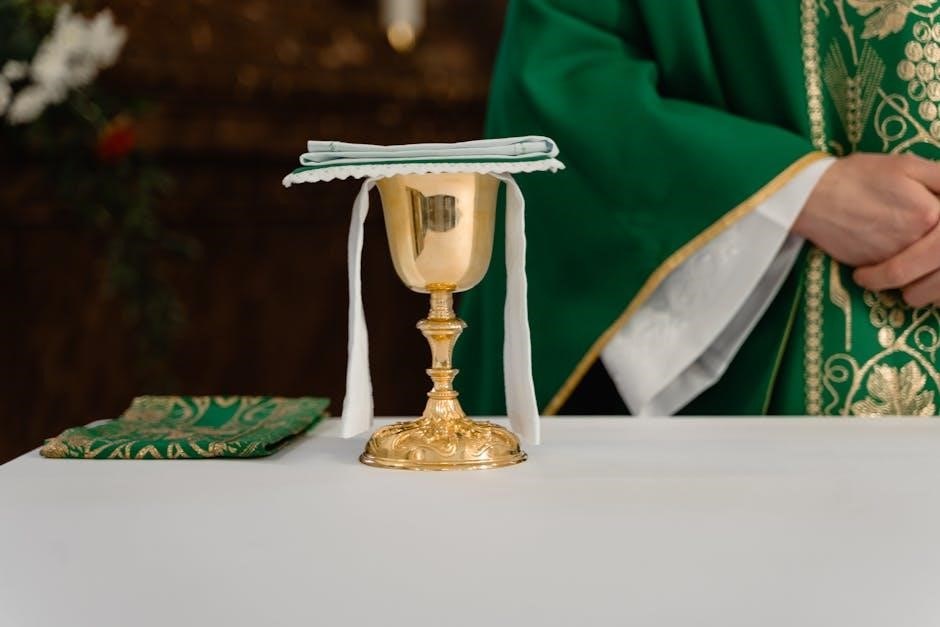
These gifts are presented to the priest at the altar, signifying the community’s participation in the sacrifice. A collection may also occur at this time, supporting the Church’s mission. The priest then prepares the altar, pouring wine and water into the chalice, a symbolic act representing the union of Christ with his Church.
Quiet reflection and hymns often accompany this preparation, creating a reverent atmosphere as the congregation prepares to receive the Eucharist.
Eucharistic Prayer
The heart of the Mass, the Eucharistic Prayer is a profound and solemn prayer of thanksgiving and consecration. The priest, acting in persona Christi, recalls the Last Supper and the sacrifice of Jesus on the cross. Through the power of the Holy Spirit and the words of Christ, the bread and wine are consecrated, becoming the Body and Blood of Christ.
This prayer includes acclamations by the congregation, such as the “Holy, Holy, Holy,” acknowledging God’s holiness. The priest then offers the sacrifice to the Father, interceding for the living and the deceased, seeking God’s mercy and peace.
It’s a moment of deep spiritual communion with God and the entire Church.
The Lord’s Prayer
Following the Eucharistic Prayer, the congregation is led by the priest in reciting the Lord’s Prayer – “Our Father, who art in heaven…” This universally known prayer, taught by Jesus himself, expresses our relationship with God as loving children. It’s a communal plea for daily bread, forgiveness, and deliverance from evil.
Reciting this prayer together unites all present in a shared act of faith and dependence on God’s providence. It’s a powerful moment of solidarity and hope, especially during a time of grief and loss.
The prayer reinforces the core tenets of Christian belief and offers comfort to those mourning.
Sign of Peace
Immediately after the recitation of the Lord’s Prayer, the priest extends a heartfelt invitation to share the Sign of Peace. He proclaims, “Let us offer each other the sign of peace.” This gesture embodies reconciliation, forgiveness, and unity within the Christian community.
Typically, parishioners exchange a simple greeting – “Peace be with you” – and a sign of affection, such as a handshake, nod, or gentle embrace, with those nearby. It’s a visible expression of Christ’s peace and a call to live harmoniously.
This moment fosters a sense of connection and shared hope amongst mourners.
Communion Rite
This sacred rite involves receiving the Body and Blood of Christ, uniting the deceased with God’s eternal life through Holy Communion.
Communion Song
As the Communion Rite begins, a song is typically sung to create a reverent atmosphere while the Eucharist is distributed. This song, often chosen by the family, should reflect themes of hope, peace, and eternal life. The music enhances the spiritual connection experienced during this intimate moment of receiving Christ’s body and blood.
The selection of the Communion song is a significant part of personalizing the Funeral Mass. It provides comfort and solace to those grieving, while also celebrating the life of the deceased. Musicians play a vital role in leading the congregation in prayerful song, fostering a sense of unity and faith. The song’s lyrics and melody should align with the solemnity and sacredness of the occasion.
Distribution of Holy Communion
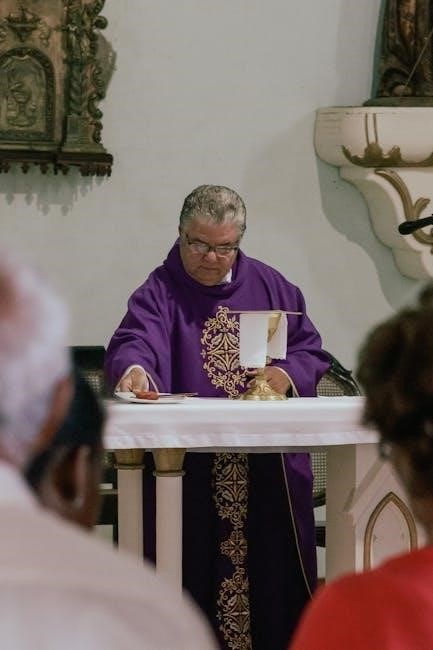
Following the Communion song, the most sacred part of the Mass commences: the distribution of Holy Communion. The priest, assisted by Eucharistic ministers, reverently offers the consecrated bread and wine to those present who are properly disposed – meaning they are Catholic and have prepared spiritually.
Receiving Communion is a profound encounter with Christ, offering strength and comfort during a time of grief. Family members and friends are encouraged to participate, if able. It’s a moment of unity with the deceased, believing in the promise of eternal life. The distribution is conducted with solemnity and respect, acknowledging the real presence of Jesus in the Eucharist, a source of hope and peace.
Concluding Rites
These rites offer final prayers and blessings for the deceased, culminating in a hopeful recessional and dismissal, signifying peace.
Final Commendation
The Final Commendation is a poignant moment where the priest offers prayers specifically for the deceased, entrusting them to God’s mercy and eternal peace. This includes a beautiful and comforting prayer, often invoking the intercession of Mary and all the saints.
During this time, family members may offer a final farewell, perhaps with a personal prayer or a gesture of love. The priest then sprinkles the casket with holy water, a symbolic act of purification and blessing, signifying the deceased’s transition to eternal life. This blessing acknowledges the hope of resurrection and God’s loving embrace. It’s a deeply moving part of the Mass, offering solace and strength to those grieving.
Sprinkling of the Casket (Final Blessing)
Following the Final Commendation, the priest performs the sprinkling of the casket with holy water, a deeply symbolic act representing purification and remembrance of baptism. This ritual signifies the deceased’s passage from earthly life into eternal rest with God. It’s a final blessing bestowed upon the body, acknowledging its sacredness and dignity.
The sprinkling isn’t merely a ceremonial gesture; it’s a powerful prayerful moment. It visually represents the washing away of sins and the hope of resurrection. Family members often find comfort in witnessing this final act of reverence, knowing their loved one is being commended to God’s loving care and eternal peace.
Recessional Song
As the concluding rites draw to a close, the Recessional Song begins, marking the departure of the clergy and the family from the church. This song isn’t one of mourning, but rather a song of hope and faith in the resurrection. It’s a transition from the solemnity of the Mass to a renewed sense of peace and remembrance.
The choice of the Recessional Song is often left to the family, allowing them to select a piece that reflects the life and faith of the deceased. It provides a final musical offering, accompanying the procession out of the church and symbolizing the journey towards eternal life. It’s a moment of quiet reflection and gratitude.
Dismissal
The Funeral Mass culminates with the Dismissal, a formal conclusion led by the priest or deacon. They offer a final blessing and words of comfort to those gathered, acknowledging their grief and offering hope in the Lord’s promise of eternal life. This isn’t merely an ending, but a sending forth.
The dismissal typically includes a phrase like, “Go forth, Christian souls, and may the angels lead you into paradise.” It’s a powerful reminder of the deceased’s faith and their entrance into God’s loving embrace. Attendees are encouraged to carry the peace and hope of the Mass with them, continuing to remember and honor the life of the departed.