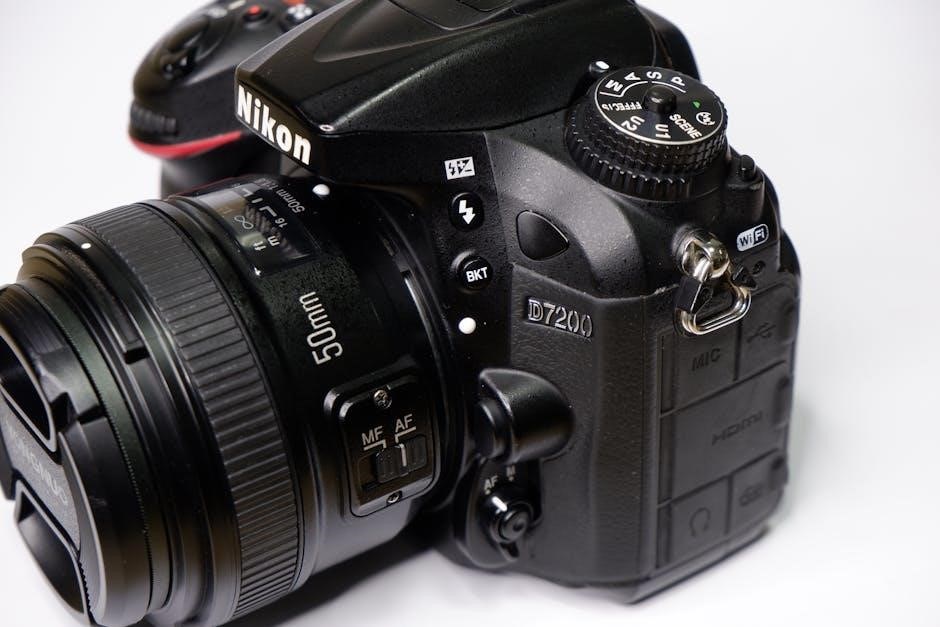
Nikon D500 Manual: A Comprehensive Guide
Unlock the full potential of your Nikon D500 with this detailed guide, offering a free PDF download for expert tips, settings, and troubleshooting assistance.
The Nikon D500 is a professional-grade DSLR camera renowned for its exceptional speed, image quality, and robust build. This manual serves as your comprehensive companion, guiding you through every aspect of utilizing this powerful tool to its fullest potential. Whether you’re a seasoned photographer or just beginning your journey, understanding the D500’s capabilities is key to capturing stunning images.
This guide provides detailed explanations of the camera’s controls, functions, and menu systems, ensuring a smooth and intuitive user experience. We’ll delve into autofocus settings, image quality options, and the intricacies of Live View and video recording. Furthermore, we’ll address common issues and provide practical troubleshooting solutions, alongside essential maintenance advice.
Accessing the official Nikon D500 manual in PDF format is crucial for in-depth understanding. This resource, alongside this guide, will empower you to master your camera and elevate your photography skills. Prepare to explore the world through a new lens!
Downloading the Nikon D500 Manual (PDF)
Obtaining the official Nikon D500 manual in PDF format is a straightforward process, providing you with a readily accessible and comprehensive resource. Several websites offer free downloads, including XenHarmonics, which provides direct access to the official documentation. This digital version allows for easy searching, printing, and offline viewing – ideal for referencing during shoots or travel.
Downloading the PDF ensures you have the most up-to-date information regarding your camera’s features and functionalities. It’s a valuable supplement to this guide, offering detailed specifications and explanations directly from Nikon. The Camera Control Reference for the Nikon D500 is also available as a PDF, detailing buttons, dials, and switches.

Always verify the source of your download to ensure it’s legitimate and free from malware. Having the manual readily available will significantly enhance your understanding and enjoyment of the Nikon D500.
Camera Controls and Functions Overview
The Nikon D500 boasts a sophisticated array of controls designed for both intuitive operation and advanced customization. Understanding these elements is crucial for maximizing the camera’s potential. Key controls include the mode dial, allowing quick selection of shooting modes like Auto, Program, Aperture-priority, Shutter-priority, and Manual.
Dials manage aperture, shutter speed, and exposure compensation, while buttons provide access to essential functions like autofocus, ISO, and white balance. The Camera Control Reference details these 23 controls, offering a comprehensive overview of their functions. Familiarizing yourself with their placement and operation will streamline your workflow.
Beyond the physical controls, the D500’s menu system unlocks a wealth of customizable settings, allowing you to tailor the camera to your specific shooting style and preferences. This overview serves as a foundation for deeper exploration of each control and function.
Buttons, Dials, and Switches
The Nikon D500 features a meticulously designed layout of buttons, dials, and switches, providing direct access to critical camera functions. The main command dial adjusts settings like aperture and shutter speed, while the sub-command dial offers secondary control. Dedicated buttons quickly access ISO, white balance, autofocus modes, and metering options.
Switches control power, shooting mode, and drive modes (single, continuous, quiet). The Camera Control Reference specifically details these 23 controls, outlining their precise functions and how they interact. Understanding the placement and operation of each element is vital for efficient shooting.
These physical controls are complemented by customizable buttons, allowing photographers to assign frequently used functions for instant access. Mastering these controls unlocks a faster, more intuitive shooting experience, enabling you to react quickly to changing conditions.
Customizing Camera Controls
The Nikon D500 empowers photographers with extensive customization options, allowing tailoring of the camera to individual shooting styles. Through the Custom Setting menu, users can reassign functions to various buttons and dials, streamlining workflow and enhancing efficiency. This includes assigning autofocus activation to the AF-ON button or customizing the control ring for specific tasks.
Personalization extends to the information displayed in the viewfinder and on the LCD screen. Users can choose which shooting data is visible, ensuring critical settings are readily accessible. The ‘My Menu’ feature allows saving frequently used settings for quick recall, further accelerating the shooting process.
These customization features aren’t just about convenience; they’re about optimizing the camera for specific photographic disciplines, enabling a more intuitive and responsive shooting experience.
Understanding the Menu System
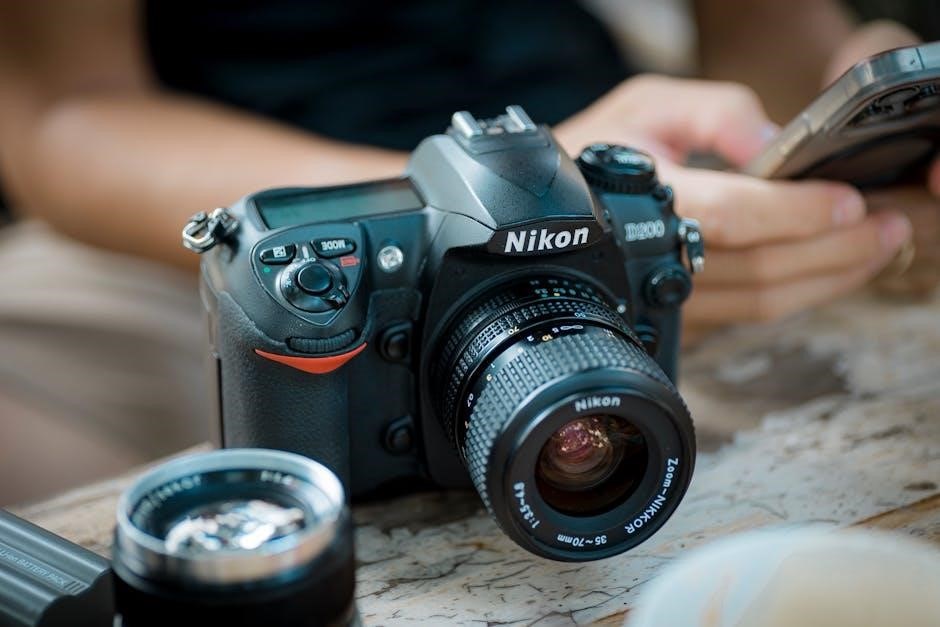
The Nikon D500’s menu system is logically organized into three primary sections: Setup, Shooting, and Custom Setting menus. The Setup menu handles general camera settings like language, display settings, and date/time. The Shooting menu controls image capture parameters – quality, ISO, white balance, and metering. Mastering these is crucial for achieving desired results.
The most powerful, yet complex, is the Custom Setting menu. This section allows deep personalization of camera functions, including autofocus behavior, button assignments, and display options. It’s where you truly tailor the D500 to your shooting style.
Navigating the menus is done via the multi-selector and rear dial. Understanding the hierarchical structure and utilizing the help system within the camera are key to efficiently accessing and modifying settings.
Shooting Menu Options
The Shooting Menu on the Nikon D500 is central to controlling image capture. Key options include Image Quality, allowing selection between RAW, JPEG, or both, and Image Size, defining resolution for your photos. ISO Sensitivity settings control the camera’s sensitivity to light, impacting image noise.
White Balance ensures accurate color rendition, offering presets and custom options. Metering mode dictates how the camera evaluates exposure, with choices like Matrix, Center-weighted, and Spot. Focus Mode (AF-S, AF-C, AF-A) determines how the autofocus system operates.
Further options include Flash Control, Auto Exposure Lock (AE-L), and Vibration Reduction settings. Exploring these options and understanding their impact is vital for achieving creative control and optimal image quality.
Setup Menu Options
The Setup Menu on the Nikon D500 manages fundamental camera settings. Language selection allows customization of the menu display. Date/Time settings ensure accurate timestamps on your images. Display Settings control the information shown in the viewfinder and on the LCD screen, including brightness and color.
Button Customization lets you assign functions to various buttons for personalized control. Sound Settings adjust the volume of camera beeps and shutter sounds. File Naming options allow you to define a consistent naming convention for your images.
HDMI Output settings control video display on external monitors. USB Connection options determine how the camera interacts with computers. Careful configuration within the Setup Menu optimizes the camera for your workflow and preferences.
Custom Setting Menu Options
The Custom Setting Menu of the Nikon D500 offers extensive personalization. Autofocus Settings refine focus behavior, including tracking sensitivity and lock-on. Metering/Exposure Settings allow fine-tuning of light measurement and exposure compensation. Image Quality Settings control JPEG compression and RAW file parameters.
Display Settings customize the information displayed during shooting and playback. Button/Dial Operation lets you reassign functions to buttons and dials for efficient control. Shooting/Display Settings manage various shooting functions and display preferences.
Video Settings adjust video recording parameters. These settings are crucial for tailoring the D500 to your specific shooting style and ensuring optimal performance in diverse photographic scenarios.
Autofocus System Explained
The Nikon D500 boasts a sophisticated 153-point autofocus system, delivering exceptional speed and accuracy. This system utilizes various focus area modes, including Single-point AF, Dynamic-area AF, and Group-area AF, allowing precise subject tracking. Understanding these modes is key to capturing sharp images.
The camera offers three primary AF-mode options: AF-S (Single Servo) for stationary subjects, AF-C (Continuous Servo) for moving subjects, and AF-A (Automatic Servo) which automatically switches between AF-S and AF-C. Mastering these modes ensures optimal focus performance.
Furthermore, the D500’s autofocus system incorporates advanced subject tracking capabilities and customizable settings for responsiveness, making it a powerful tool for wildlife, sports, and action photography.
AF-S, AF-C, and AF-A Modes
The Nikon D500 provides three distinct autofocus modes tailored for diverse shooting scenarios. AF-S (Single Servo) is ideal for stationary subjects; the camera focuses once when the shutter button is half-pressed and maintains that focus until re-focused. It’s perfect for portraits or landscapes.
Conversely, AF-C (Continuous Servo) excels with moving subjects. The camera continuously adjusts focus as the subject moves, ensuring sharpness throughout a sequence. This mode is crucial for sports and wildlife photography.
AF-A (Automatic Servo) intelligently selects between AF-S and AF-C based on the detected subject movement. While convenient, it’s generally recommended to manually choose AF-S or AF-C for more predictable results and greater control over focus behavior.
Focus Area Modes and Selection
The Nikon D500 offers a versatile range of focus area modes to precisely target your subject. Single-point AF allows you to select one specific focus point for pinpoint accuracy, ideal for static subjects requiring precise focus. Dynamic-area AF utilizes the selected focus point and surrounding points, tracking a moving subject while maintaining focus.
Group-area AF employs a cluster of focus points, beneficial for subjects within a defined area, while Auto-area AF lets the camera automatically select focus points – best for quick, general shots. 3D-tracking is excellent for erratic subject movement, continuously tracking the subject across the frame.
Selecting the appropriate mode via the camera’s controls is crucial for optimal autofocus performance. Experimenting with these modes will help you master focusing in various shooting conditions.
Image Quality and Settings
Understanding image quality settings on your Nikon D500 is vital for achieving desired results. The core choice lies between RAW and JPEG formats. RAW captures all image data, offering maximum flexibility for post-processing and editing, though files are larger. JPEG provides compressed files, ready for immediate use, but with some data loss.
Within JPEG settings, you can adjust image size (Large, Medium, Small) and quality (Basic, Normal, Fine, Super Fine). Higher quality settings result in larger file sizes but retain more detail. Consider your intended use – web display requires lower resolution than large prints.
Experimenting with these settings allows you to balance file size, image detail, and editing flexibility. Mastering these options unlocks the full potential of the D500’s sensor.
RAW vs. JPEG
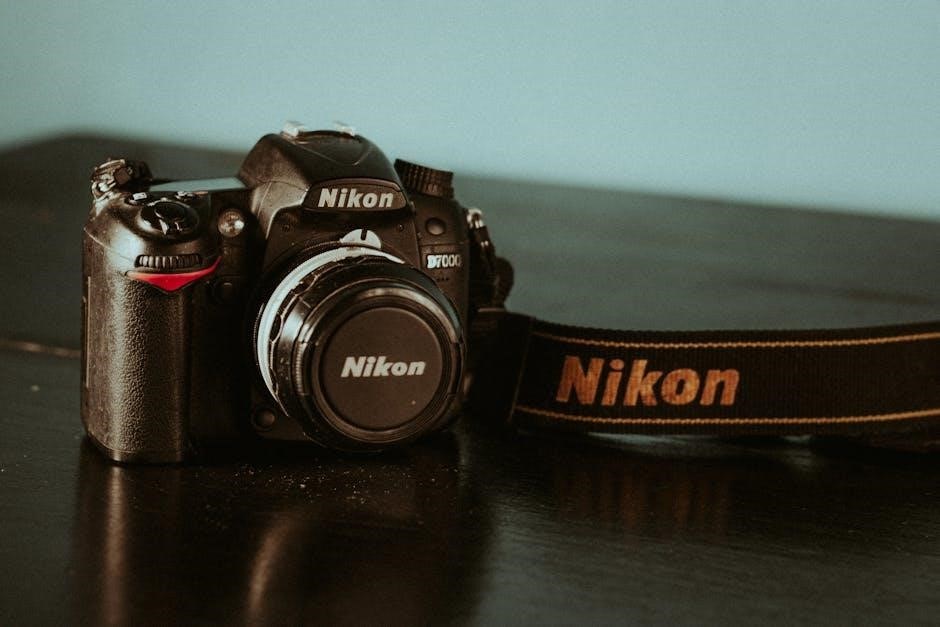
The Nikon D500 offers a crucial choice: shooting in RAW or JPEG. RAW files are essentially unprocessed data directly from the sensor, preserving maximum detail and dynamic range. This provides unparalleled flexibility during post-processing, allowing extensive adjustments to exposure, white balance, and more, without significant quality loss.
However, RAW files are considerably larger and require dedicated software for editing. JPEG, conversely, is a compressed file format, ready for immediate use and sharing. It’s convenient but involves some data loss, limiting editing capabilities.
Choosing depends on your workflow. Professionals often prefer RAW for critical work, while casual users might favor JPEG for convenience. The D500 also allows simultaneous RAW + JPEG recording, offering the best of both worlds.
Image Size and Quality Settings
The Nikon D500 empowers photographers with granular control over image resolution and compression. Within the menu, you can select from various image sizes, ranging from large (typically around 5568 x 3712 pixels) to small, impacting file size and detail. Larger sizes are ideal for prints and extensive cropping, while smaller sizes are suitable for web use or situations where storage is limited.
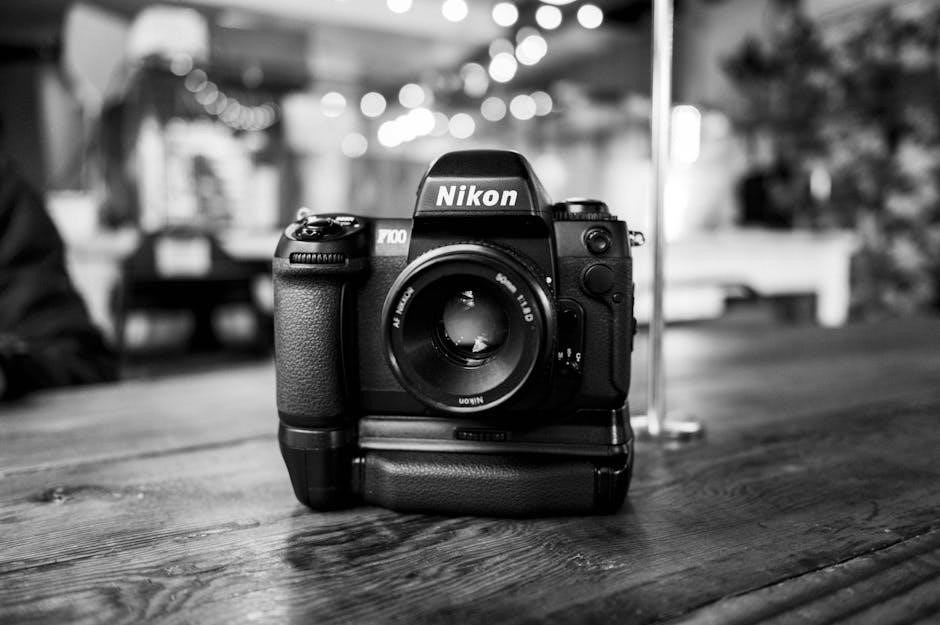
Alongside size, quality settings determine the level of JPEG compression. Higher quality settings result in larger files with minimal compression artifacts, preserving more detail. Lower settings reduce file size but introduce more compression, potentially impacting image clarity.
For RAW images, you can choose the bit depth (12-bit or 14-bit), influencing the range of tonal information captured. Experimenting with these settings allows you to balance image quality with storage space requirements.
Live View and Video Recording
The Nikon D500’s Live View mode offers a unique shooting experience, displaying the image directly on the LCD screen. This is incredibly useful for precise composition, especially in challenging angles, and allows for utilizing the autofocus system for still photography. However, be mindful of potential overheating during extended Live View use.
Transitioning to video, the D500 records high-quality footage up to 4K resolution. Accessing the video settings menu unlocks options for frame rates, codecs, and audio control. You can select between various recording formats, impacting file size and editing flexibility.
External microphones can be connected for improved audio quality. Mastering these settings ensures professional-looking videos, leveraging the camera’s robust capabilities.
Using Live View for Photography
Employing Live View on the Nikon D500 provides a distinct advantage for precise image capture. The large LCD screen allows for detailed composition and focus confirmation, particularly beneficial in macro photography or when using a tripod for landscape shots. It’s also invaluable for situations where the viewfinder is impractical.
Within Live View, you can utilize various autofocus modes, including face-detection AF, ensuring sharp portraits. The ability to magnify the image on the screen enables critical focus checking, eliminating guesswork. Remember that prolonged Live View usage can lead to sensor overheating, so monitor the camera’s temperature.
Experiment with exposure preview to visualize the final image before pressing the shutter, aiding in achieving optimal results. Live View unlocks creative possibilities and enhances control over your photography.
Video Recording Settings and Options
The Nikon D500 offers robust video capabilities, allowing for recording in various resolutions and frame rates, including stunning 4K UHD at up to 30p. Accessing these settings requires navigating the camera’s menu system. You can choose between different video formats, such as MP4 for easy editing and compatibility.
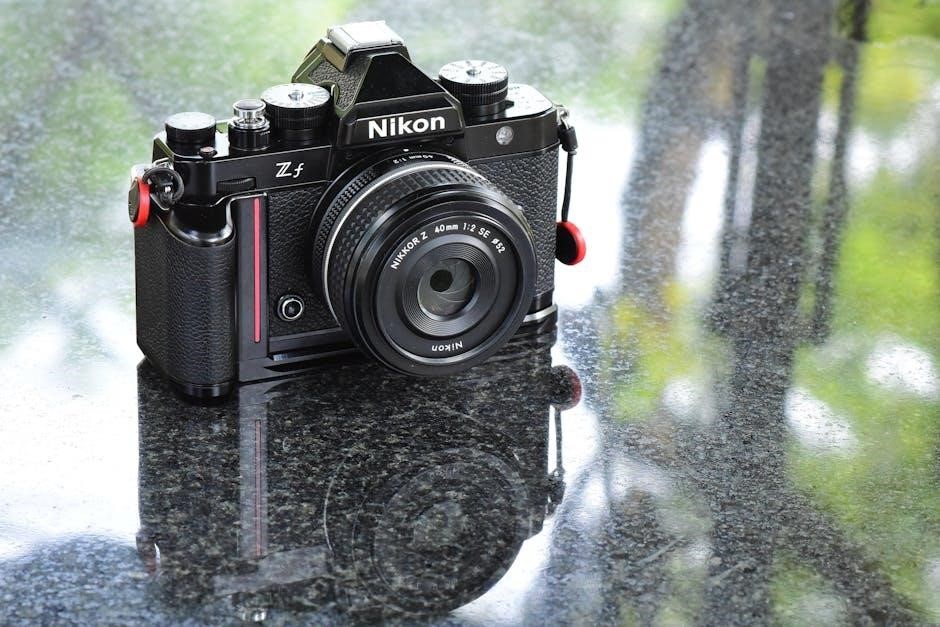
Adjusting the audio levels is crucial for professional-sounding videos; utilize the microphone input and headphone jack for monitoring. Explore options like zebra stripes to ensure proper exposure in your footage. The D500 also supports picture controls for customizing the video’s look and feel.
Consider utilizing focus peaking during manual focusing for sharp results. Remember to select an appropriate frame rate based on your desired creative effect – 24p for a cinematic look, or 60p for slow-motion possibilities.
Troubleshooting Common Issues
Encountering problems with your Nikon D500? Several common issues have readily available solutions. If the camera freezes, try removing and reinserting the battery. Error messages often indicate specific problems; consult the manual for a detailed explanation of each code and its corresponding fix.
Focusing issues can often be resolved by cleaning the autofocus sensor or switching to a different AF-area mode. Image quality problems might stem from incorrect settings – ensure you’ve selected the appropriate image size, quality, and white balance.
If experiencing connectivity problems, verify your cable connections and settings. Regularly updating the camera’s firmware can also address bugs and improve performance. Remember to consult the official Nikon support website for further assistance and detailed troubleshooting guides.
Error Messages and Solutions
The Nikon D500 displays error messages to indicate specific camera issues. “Err” followed by a code requires immediate attention. For example, “Err 2000” signifies a memory card error – try a different card or format the existing one. “Err C10” indicates an internal camera error, often requiring a reset or service.
“Err F–“ messages relate to the lens; check the lens contacts and ensure proper attachment. Regularly consult the camera’s manual for a comprehensive list of error codes and their meanings. Nikon’s support website provides detailed explanations and troubleshooting steps for each error.
Before seeking professional repair, attempt basic solutions like battery removal, card reinsertion, and camera reset. Document the error code and circumstances for accurate support assistance. Ignoring error messages can lead to further damage.
Basic Camera Maintenance
Regular maintenance ensures your Nikon D500’s longevity and optimal performance. Always power off the camera before cleaning. Use a blower to remove dust from the sensor and viewfinder; avoid touching them directly. Gently wipe the exterior with a soft, dry cloth.
Store the camera in a dry, dust-free environment, ideally in a camera bag. Periodically check and clean the lens contacts with a lens cleaning cloth. Avoid using harsh chemicals or solvents. Battery care is crucial; remove the battery for extended storage to prevent leakage.
Inspect the camera’s ports and compartments for debris. Professional sensor cleaning is recommended annually, or more frequently in dusty environments. Proper handling and storage are key to preventing damage and maintaining image quality.
Safety Precautions and Handling
Prioritize safety when using your Nikon D500. Avoid looking directly at the sun through the viewfinder or lens, as this can cause serious eye damage. Protect the camera from extreme temperatures, humidity, and direct sunlight. Never disassemble or modify the camera yourself; this voids the warranty and poses a safety risk.
Handle the camera with care to prevent drops or impacts. Use a neck strap or wrist strap for added security. Keep the camera away from water and other liquids. Do not use the camera in hazardous environments. Always follow local regulations regarding photography.
Ensure the battery is properly installed and charged. Discontinue use if you notice any unusual smells, smoke, or overheating. This product requires careful operation; always read the manual first.